Visit our Facebook Page



I went to the Canary Island people have been saying to avoid | Europe | Travel

The island was so beautiful – despite the windy weather (Image: Natalie King)
I’m often told I have a stubborn streak, and there’s nothing that makes me want to do something more than being told I shouldn’t. So, when I saw one of my favourite destinations on Fodor’s No List for 2026, I can’t say it deterred me from booking; quite the opposite.
Fodor’s list isn’t a guide to places that are dangerous or off limits, but rather includes places the team behind the study deem to be overcrowded, overrated, or facing environmental challenges. And high on the list for 2026 was a perennial favourite with Brits; the Canary Islands.

I book a trip to the Canaries despite the advice against it (Image: Natalie King)
The article pointed out some of the issues on the islands, saying: “Behind the postcard-perfect scenes in the Canary Islands, pressure is mounting. In the first half of 2025 alone, the archipelago welcomed 7.8 million visitors and processed more than 27 million airport passengers, a 5% increase over the previous year. It’s a record that has locals questioning how much more their islands can take.”
While this year has seen a drop in visitor numbers, according to Canarian Weekly, it’s clear that the Canaries still struggle with overtourism in some areas. We opted to visit Gran Canaria, which is the second-most visited island overall, although more popular with Germans and Scandinavians than Brits.
I’ve previously visited Lanzarote and Fuerteventura, and I’ve found them to be stunningly beautiful, if a little more touristy than I’d usually like. Tourism is a huge part of their economies, and it feels like it’s woven into the islands’ culture. It feels hard to get off the beaten track and find things that are authentically Canarian.

The incredible Masplasmos dunes can be found in the island’s south (Image: Matthew King)
But Gran Canaria felt different. Because the sandy beaches tend to be concentrated in the south of the island, the rest of the island doesn’t feel like a tourist playground. If you just want to fly in and flop down on a sunbed, you can certainly do so, but the rest of the island feels like it has kept its culture intact.
And what a stunning island it is. Made up of volcanic landscapes that rose from the sea millions of years ago, it has such a unique combination of sand dunes that look like the desert, lush green mountains that could be in South America, and beaches that felt like they were in an exotic, far-flung location.
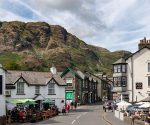
During our trip we managed to visit quaint villages in the mountains, being expertly driven through terrifying winding roads by our very experienced driver. We got close to the highest peak in Gran Canaria, enjoying views across miles of unspoilt scenery despite being up in the clouds. A highlight was Tejeda, named one of Spain’s most beautiful villages, which was so serene it felt like the volume had been turned down on the entire world.

Tejeda was an incredibly serene village (Image: Natalie King)
The island’s capital, Las Palmas de Gran Canaria, was also enchanting, and we loved walking round the pretty Triana neighbourhood in particular to look at the colourful colonial-style homes and buying souvenirs in the little shops we found down cobbled streets. Most of the island’s permanent residents live around the city, so there are also areas that are a little more utilitarian, where you’ll find big shopping centres and fast food joints, but also some great authentic restaurants that only have menus in Spanish – always a good sign.
But don’t mistake my eagerness to escape the tourist crowds for a kind of snobbery. Frankly, I enjoy a day on a sunbed and a few cocktails as much as any Brit abroad, and the resorts in the south shouldn’t be completely discounted. I wouldn’t return to Playa del Inglés, although it has a lovely sandy beach. The level of harassment from restaurateurs and street sellers put me off, and I have a policy of never eating in places that have people trying to pull you through the door, making it difficult to find anywhere for lunch.

Puerto de Mogán had a good mix of touristy and authentic (Image: Natalie King)
If you want to stay somewhere that has the touristy facilities, but retains its charm, then Puerto de Mogán seemed to strike the right balance.This fishing village is sometimes compared to Venice thanks to its canal that runs to the sea, and manages to keep its quaint charm while still being host to decently sized resorts and family-friendly restaurants.
It also became our favourite beach, as the sandy, shallow cove was perfect for swimming and paddling, and hiring a huge Bali bed for the day was a fairly reasonable €20 (about £17), which easily gave me, my husband, and two wriggly kids plenty of space to spread out in the sun. While it was a lively beach, the sound of restaurants on the promenade and kids playing all around you, I felt that deep sense of calm that only a good old-fashioned beach holiday can bring.
Have a story you want to share? Email us at webtravel@reachplc.com