Visit our Facebook Page



I visited two of UK’s best seaside towns and they were worlds apart | UK | Travel

Whitby was the first town on our list (Image: Emily Heward)
It may not have the tourist hordes of Cornwall or the Instagram hotspots of Dorset, but Yorkshire’s coastline is undoubtedly one of the UK’s most beautiful.
Growing up in God’s Own County, I have fond childhood memories of holidays spent at the seaside resorts scattered along the edge of the North York Moors. And now with a small child of my own, nostalgia had been nagging at me to return.
So with the grandparents in tow for the full family reboot, we booked a half term holiday with two of our favourite spots on the itinerary. Whitby and Scarborough are both regularly voted among the UK’s best seaside towns. But while there might be only 20 miles separating them, they’re worlds apart with their distinct character and charm.
Whitby, with its jumble of steep cobbled streets and terracotta rooftops backdropping its picturesque port, is a magnet for literature lovers and Goths thanks to the dramatic clifftop abbey ruins that inspired Bram Stoker’s Dracula. Scarborough meanwhile offers a more traditional British seaside experience perfect for families, with its wide sandy beaches and promenade lined with amusements and ice cream parlours.
We spent our first day in Whitby, parking up by the marina and stopping to admire the full-scale replica of HMS Endeavour – the ship on which Captain Cook made his first voyage in 1768. Previously a visitor attraction, it’s now home to The Whitby Endeavour, a floating restaurant and bar.
We’d set our sights on lunch elsewhere, though. Just over the road is Trenchers, the town’s famous fish and chip restaurant that’s just been named one of the UK’s best. My family has been coming here for four generations now, ever since it opened in 1980, and while The Magpie Cafe around the corner may attract longer queues and more critical acclaim, we’ve never wavered in our loyalty.
Inside, we found it as comfortingly nostalgic as ever with its dark green leather booths, marble-topped tables and waiting staff zipping smartly around in their crisp uniforms.
The food was slow to arrive but well worth the wait.The medium cod and chips (£19.95) I ordered was so big it barely fit on the plate. The pearly, perfectly-flaking fish was coated with a crisp batter as golden and bubbly as honeycomb and the generous helping of chips had the distinctive depth of flavour only a fry in beef dripping can bestow.

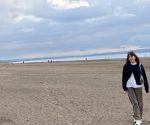
A view of Whitby Beach (Image: Emily Heward)
My next stop on memory lane was to buy one of the town’s famous Lucky Duck souvenirs for my daughter, like the one I’d loved as a child. Sadly the Whitby Glass gift shop in Sandgate, where the tiny handmade glass duck figurines were sold for 68 years, closed over summer. But as luck would have it, we found them still on sale in Rainbow Shells and Gems in Haggersgate.
We then crossed the swing bridge over the River Esk into the East Side’s old town. Strolling its quaint cobbled streets, we stopped to pick up treats from Roly’s Fudge and admired the many jewellers dealing in jet, Whitby’s famous black gemstone
From this side of town, you can also climb the 199 steps up to St Mary’s Church and the Abbey headland. Having my four-year-old with me was a convenient excuse to park that particular pilgrimage..
Instead, we bought an ice cream and headed along Henrietta Street to Fortune’s Kippers, the 150-year-old smokehouse and shop that has sold its herrings to everyone from Rick Stein and Mary Berry to Princess Anne.
Our luck had run out – and so had the kippers. They’d sold out for the day and shut up shop by the time we got there. So we finished our day hunting for shells on Tate Hill Beach, the small and secluded bay on this side of the Esk.
On the other, there’s a longer, sandier Blue Flag beach perfect for sandcastles and donkey rides in summer, overlooked by the town’s famous Whalebone Arch up on the West Cliff.

Fish and Chips at Trenchers was a must (Image: Emily Heward)
Day two took us to Scarborough, a town that has been much maligned over the years. Critics have called it ‘run-down’ and it’s true that it’s one of the more deprived parts of North Yorkshire.
But as a visitor destination, Britain’s first seaside resort still has so much to offer. The South Bay is where you’ll find most of the action, with a promenade packed with amusement arcades, chippies and souvenir shops.
Centuries on from its Victorian heyday, much of the era’s splendour remains. Towering above the seafront is the majestic Grand Hotel (now sadly in the hands of Britannia, the hotel chain ignominiously rated the UK’s worst for 12 years in a row), next to the cliffside St Nicholas Gardens. Between them, the Central Tramway funicular shuttles visitors up and down the steep cliff.
In the distance, the ruins of the medieval Scarborough Castle stand sentinel on the headland dividing it from the North Bay.
It was a crisp, cloudless day when we visited and we spent hours on the sand, building castles and chasing the waves gently lapping at the shore.
It wasn’t long before the bright lights of the amusement arcades lured us in and we whiled away some more time dripping two-pence pieces into the coin pushers at Olympia Leisure. Is any childhood complete without this questionably young introduction to gambling?
After lunch at the Golden Grid seafood restaurant overlooking the harbour, we enjoyed another blast from the past at the Harbour Bar. The retro ice cream parlour opened in 1945 and is untouched by time. The diner-style interior looks exactly the same as I remember it as a kid: a cheery yellow vortex of vinyl, chrome and Formica. We take a seat at the central bar and split a lemon-lime ice cream float and a Cherry Amour – a gigantic sundae piled high with chocolate sauce and black cherries.

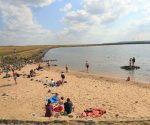
A view of the beach and town in Scarborough (Image: Emily Heward)
We ran out of daylight hours to visit the North Bay, where there’s a quieter stretch of sand as well as attractions such as the Sea Life aquarium and Scarborough Open Air Theatre, which has established itself as one of the north’s premier gig venues in recent years. Next year’s calendar includes shows from the likes of CMAT, Rick Astley, Richard Ashcroft, James Taylor, Nile Rodgers and Chic.
Just over the road from the theatre is Peasholm Park, which is well worth a visit in summer for a row on its dragon boats and a stroll through its Japanese-themed gardens.
Where we stayed
We based ourselves near Dalby Forest for our break, staying at a farmhouse hunkered deep in a valley so comically remote the directions came with a series of photos of farm tracks and gates, scrawled-on arrows pointing the way. The breathtaking drive took us directly through the forest, the trees ablaze with autumn colours.
Situated about half an hour from Scarborough near Thornton-le-Dale, the property, Thompson Rigg Farmhouse, was a beautifully-appointed family home. We booked through Sykes Cottages and it cost us £743 for three nights in October half term. It was a blissfully serene setting to return to from our day trips, with a bubbling hot tub waiting under an inky black sky – perfect for stargazing.
In our desperation to escape the British weather, it can be all too tempting to book a cheap package holiday somewhere sunny. But trips like this always remind me: there truly is no place like home.